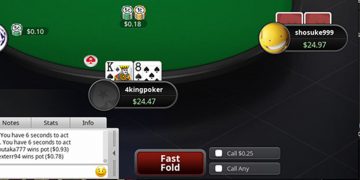








Texas Hold-em is a relatively easy poker game to learn, but as they say “It takes a moment to learn but a lifetime to master”. It’s this simple truth and skill factor that makes poker and especially holdem such an absorbing, enjoyable yet at times frustrating gambling game.
There are plenty of strategic maneuvers one can learn to increase profits and decrease chip loss when playing Texas Hold-em, but it is highly recommended to take the Texas Hold-em Strategy process one step at a time.
Texas Holdem Beginner Strategy
Novice Texas Hold-em players, or veteran players who have never applied a Texas Hold-em strategy, should start out with this initial guide – the Texas Hold-em Beginner section. We will offer a few key elements that beginners should apply to their Texas Hold-em game to decrease losses and maximize winnings.
Pick Your Player Type
In general, there are 4 types of poker players – Loose/Passive, Loose/Aggressive, Tight/Passive and Tight/Aggressive.
- Loose Players:
Loose players are defined by their consistent desire to see the lop, disregarding the strength of their Starting Hands, or moving on with marginal hands, rather than waiting for premium holdings. Basically, Loose players filter out too many chips Pre-Flop. Being a loose poker player isn’t always a bad thing, however. Loose players can often steal Blinds by placing a large bet that forces tight players to Fold more often than not. As a novice player, Loose game play is not suggested until you’ve become more accustomed to reading your opponents. Loose players can often win a tidy sum if playing against predominantly Tight players.
- Tight Players:
Tight poker players are those who Fold Pre-Flop way more often than they move on. This is because they are paying close attention to Starting Hand selection, choosing to conserve their chips for a hand that has a better chance of winning. Most professional poker players choose to play a Tight poker game, knowing it is more beneficial in the long run.
- Passive Players:
A Passive poker player will place small to medium size bets, but rarely places a large bet without the Nuts (best possible hand). If a Passive poker players pushes all-in, be afraid.
- Aggressive Players:
An Aggressive poker player is one who is not afraid to place a large bet or raise, usually in hopes of knocking other players out of the pot. When an Aggressive player has a good hand, even if it is not the nuts, they will call a large raise or re-raise with confidence. Aggressive players are generally successful bluffers who earn most of their winnings by encouraging others to Fold.
From these player types, you need to decide which will suit your style of poker play best. A tight poker game is highly recommended for beginner Texas Hold-em players. the only problem most newbies face with a Tight poker game is the ability to remain cool, calm and collected, even during long swings of Folding. Getting bored causes bad decisions, and bad decisions result in losses.
Starting Hand Selection
Until you develop an instinctual feel for the game and the ability to successfully read your opponents, you should never waver from a good Texas Hold-em Starting Hand strategy. As we just mentioned, letting yourself get bored is dangerously costly. During long periods of folding due to bad Starting Hands, concentrate your unused energy on reading your opponents and picking up on their betting and behavioural patterns. Wait for a good Starting Hand, then make your move.
Texas Holdem Intermediate Strategy
Texas Hold-em is a game won by the application of intense strategy and strict discipline. There are many aspects of a Texas Hold-em Strategy that can be employed to decrease losses and increase profits. In this section, we will discuss strategy meant for players who are already quite familiar with the game.
We will cover three key elements – knowing the Nuts, Sequence Betting and avoiding chasing a pot with the Second Best Hand.
The Nuts
The “Nuts” is the best possible hand a player can have, according to what is available on the board. For instance, the Flop comes down with three hearts, the Nuts would be a Flush. It is very important to be able to determine the Nuts after the Flop, Turn and River. You simply need to determine what Hole Cards could be added to the Community Cards to make the best possible 5-card poker hand.
If you have the Nuts, take advantage of it. Slow play the hand and draw as many chips into the pot as you can. If you notice another player who made a small bet to start, then bets heavily after the Flop, Turn or River, it is usually safe to assume they have the Nuts. This will save you a lot of lost chips in the long run by bowing out early and waiting for a better hand.
Sequence Betting
This section refers to how you should bet, according to your position, your hand and the current betting round.
From early position, you want to be very careful about making large bets. You are not afforded the opportunity to see how confident your opponents are in their hand. In early betting rounds, do not limp in, as it causes late position bettors to see you as a weak player. They will place a large bet to scare you away from the pot, and you have no way of knowing whether they are bluffing, or really have you beat. Instead, place a medium bet to let them know you mean business.
From late position, you have the best opportunity to scoop the pot. If no other player is showing confidence in their hand, and you have marginal holdings, place a large bet to force them to Fold. If one or two players remain in the hand, you still have those marginal holdings that will hopefully improve. You will have the choice whether to Bluff and steal the pot, or – with a monster hand – make them think you are bluffing to draw more chips into the pot.
As you reach the latter rounds of betting, on the Turn and River, your position becomes less relevant. More often than not, there will only be a few players left in the hand anyway, as all tight players will Fold Pre- or Post-Flop. If you have the Nuts, place medium bets/raises to keep players tossing chips into the pot. A low bet will make them suspicious, while a large bet may cause them to Fold. A medium bet relays that you are on a good Draw hand, but haven’t hit it yet.
Should have have a good hand, but not the Nuts, place a large bet to make others think you have the Nuts. In most cases they will Fold, unless they have the Nuts, or a monster hand. As you get into an Advanced Texas Hold-em Strategy, you will learn how to read your opposition, making these decisions a bit easier. If you suspect your opponent has you beaten, Fold out and save your chips for a better hand, rather than suffering a big loss.
Chasing with Second Best
This is one of the most dangerous situations in Texas Hold-em, and often results in the largest chip losses in the game. Be very careful that you don’t place large bets and raises with the second best hand, when your opponent is showing all the confidence of holding the Nuts.
For example, if the board is showing 5s-3h-6h-Jh-Qh, and you are holding the Kh, you have the Second Best possible hand. Anyone holding the Ah will have you beaten. Many less experienced poker players will see their King-High Flush as a monster hand and continue betting to the showdown with no regard for the their opponent’s actions. However, if your opponent is willing to Call those large bets and raises, it’s safe to assume he has you beaten.
Hands like these often result in an All-In bet. Do not let yourself chase a pot with the second best hand or you’ll end up short-stacked, if not ousted from the game entirely.
Texas Holdem Advanced Strategy
This section is meant for experienced players who have already developed a moderately successful poker strategy, but would like to take their game to the next level.
In the previous sections, we instructed beginner and intermediate Texas Hold-em players on the rules of the game, proper starting hand selection, how to become a specific type of player that meets your preferred style of poker (Loose, tight, Passive, Aggressive), understanding the Nuts, sequence betting and how to avoid chasing a pot with the second best hand.
Each of these aspects are very important to a wining Texas Hold-em strategy, and should be practised to the point of easy implementation before moving on to this last section – the Texas Hold-em Advanced strategy.
In this last instalment, we’ll cover Bluffing techniques, including the Semi-Bluff and Check Raise, and how to Play the Players.
Bluffing
A good bluff is Texas Hold-em is placed from the proper position, when all other opponents present the right situation to pull off a successful bluff. Bluffing is most commonly used in Pre-flop situations to steal blinds. Note that in tournament scenarios, stealing blinds becomes much more profitable in the latter stages, and Bluffing to steal blinds should not be done too often before this point.
The problem most players encounter with bluffing is the choice to bluff too often. Once you are called on a bluff, no one at the table will trust you any longer, making the option to bluff near obsolete. A player must be very careful no to bluff too often, so he doesn’t get caught and labelled a bluffer.
The best time to attempt bluffing is from late position, when no other opponent is showing confidence in their hand. There should be only one or two players remaining in the hand, with all others having folded. If these remaining players have limped in (called the Big blind, but not Raised), you can place a moderate to large raise from late position, encouraging everyone else to fold. If you are in late position, and all previous bettors have folded, you are almost guaranteed a successful bluff to steal the blinds.
Semi-bluffing
The Semi-bluff is the safest bluff in poker. This means your hand has at least the potential to become great after the Flop. The rules of the Semi-Bluff are the same – requiring a late position and no confidence from previous opponents. The outcome is much different, however, since getting called on a Semi-bluff does not get you labelled a bluffer.
Check-Raise
this is one of the most cunning moves in all of poker, used to draw more chips into the pot before declaring your virtually guaranteed win. If you watched poker events on television in the past, you’ve probably seen this pulled off a few times. Daniel Negreanu is especially well known for the successful Check-Raise.
To pull off a check-raise, you need to have a monster hand, or even the Nuts, after the Flop, Turn or River. Open with a Check, and if your opponent has even marginal holdings, he will most often place a large bet to scare you away from the pot. Counter with a large Raise of your own, and he knows he is doomed. He will either fol the pot to you immediately, or make the less common mistake of calling, giving you even more chips to scoop at the showdown.
Many players make the mistake of calling, because they feel they have invested too much to simply fold at this point. If you know you’ve got them beat, use the Check-Raise and take them for all you can. By reading your opponents throughout the session up until this point, you should be able to determine whether they will fold or make the call. This will help you decide whether your holdings are string enough to attempt the Check-Raise.
Playing the Players
As a veteran poker player, you should know by now that Texas Hold-em is not a game of cards, but a game of psychology. You are not simply hoping to develop the strongest hand, but to make your opponents think you have the best hand. If you’ve watched live poker events, you probably noticed that most hands do not go to a showdown, but rather to the player who outlasted their competition by encouraging everyone else to fold. This is what we mean by playing the players.
You need to develop a keen sense for your opponents’ behaviour. There are four general player types – Loose/Passive, Loose/Aggressive, tight/Passive and Tight/Aggressive. It should only take a few hands of play to label each opponent as one of these player types.
Loose players are easily destroyed by playing a tight game against them. Because they call most flops, they will often get lucky enough to win with a good Draw hand. However, they will falter to a tight player who knows how to reel them in by slow playing a monster hand.
Tight players are harder to defeat, since they fold more often than not. However, they are very easy to bluff and steal blinds from, since they are so conservative with their chips. If they think they are beaten, they will Fold, period.
Watch for behavioural patterns, especially when playing in person. Nervous ticks like touching the face, adjusting glasses or hats, are a sure-tell sign that they have something good.
In online poker, watch for chatty behaviour and determine whether it means they have a bad hand and are bored, or are trying to distract you when they have a great hand.
Betting patterns are always apparent if you observe well and, in online poker, take notes. Do they always bet high in late position? If so, they are likely consistent bluffers. Do they fold without a premium starting hand? Will they call Pre-Flop just to see if their hand improves ? There are many betting patterns to be observed. Watch closely for these and you will be able to figure out your opponents in no time, taking advantage of their weaknesses.
On a final note, be sure you don’t let yourself be read. If you’re reading them, you can bet they are doing the same to you. Do not be entirely consistent. Change up your game play, tight to loose, passive to aggressive, etc. Keep them guessing and you’ll have the upper hand throughout every cash game and tournament you play.